
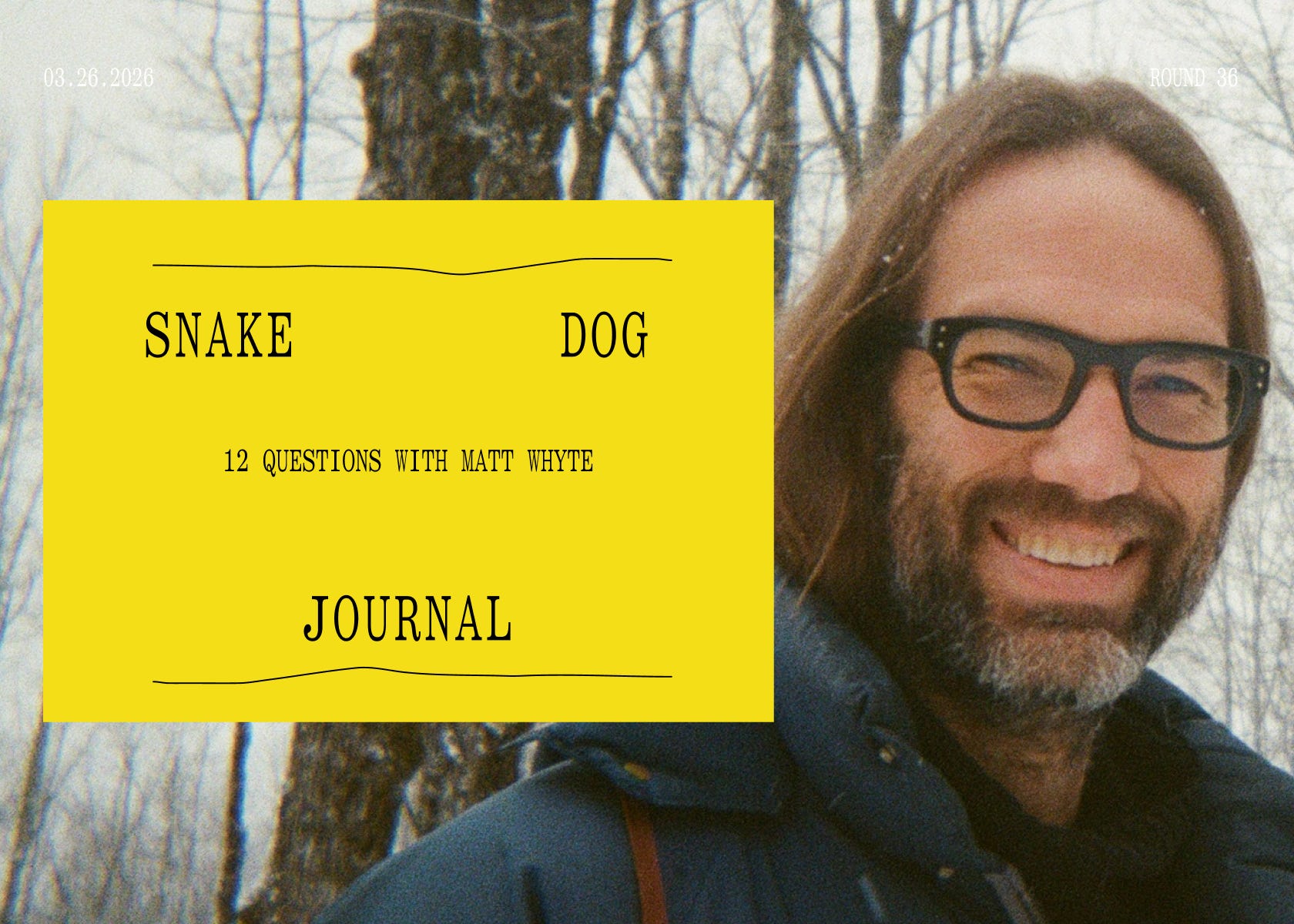
When Matt Whyte alludes to living a life beyond his wildest dreams, he means it. Science journalist living in Cooperstown, New York was never on the playing field of possibilities. Until it was. As host of Sing for Science, a podcast that brings together the big names from music with the big names from science to discuss the biggest of the big ideas (theoretical physics, mycology, the psychology of Fascsism, etc.), Whyte skillfully moderates the explanation of the difficult to explain. And yet, when it comes to his own recovery, he says, what he finds in it “defies explanation.” For a guy who has spent many years on the road, he aims for the middle of his, the one that leads to self-esteem via esteemable acts. No shade to the bass or the treble but it’s the balance that really matters. Whyte recalls “the halcyon days” of early sobriety—90 days in, at quarter life, and on tour with his band at the time, Earl Greyhound. Amongst boxes and boxes of tapes his drummer had brought along for the ride was the providentially titled album, You’re A Big Boy Now by The Lovin’ Spoonful. On it, the song “Darling Be Home Soon” effloresces with the lyrics: “A quarter of my life is almost past / I think I’ve come to see myself at last / And I see that the time spent confused / Was the time that I spent without you / And I feel myself in bloom.” Serendipitous (or dare I say scientific) words to describe Whyte’s own transformational journey back from a “challenging lifestyle” (what Joseph Campbell might call “the depths”) to a Self that finds joy in the equilibrial, the “going away” and the “coming home,” and one that blooms and keeps blooming.
What’s your take on “the science of sobriety?”
The phenomenon of practicing acceptance is so central to recovery. When they studied the practice of acceptance in a lab, the assumption was that you would see something in the frontal lobe light up (where other active decision making processes take place). But it didn’t. When you practice acceptance, it happens somewhere deeper in the brain (the amygdala). Think about how the brain has evolved and how it develops as a fetus. It starts at the bottom—at the stem—and grows up to the front. Acceptance provides a kind of foundational support.
There’s a notable line in the Big Book, “Physicians who are familiar with alcoholism agree there is no such thing as making a normal drinker out of an alcoholic. Science may one day accomplish this, but it hasn’t done so yet.” Why not?
Recovery addresses the root cause of why we wanted to use in the first place. I can’t imagine that a pill or an injection is going to provide that. If I’ve learned anything—especially from my years of using—it’s that there are no shortcuts. It’s either pay now or pay later. It’s a fundamental principle that we all have to live by. As a sober person, I don’t crave being able to drink normally. Life is so much richer without it. I can’t imagine why we would want to reincorporate it.
What’s your POV on the compatibility of science and a higher power?
Spirituality is such a four-letter word to some people. It’s a non-issue for me. I believe we are all connected in a way that science has yet to prove. I don’t think many people can take issue with that. Except for hardcore physicalists. What may be immaterial for some, may be something rooted in physicality for others. For instance, there’s a school of thought emerging that consciousness itself might be fundamental, that electrons themselves have consciousness. If you buy that, it’s not such a fanciful notion that the spirit would survive after death. It’s a really exciting time. So many lines are blurring between these things that were once binary, you know, either you believe in God or you’re an atheist. It’s so much more complicated than that.
What’s your take on the connection between rock and roll and the debauched and degenerate?
There was such a mythology of rock and roll growing up in the 80s. And it was quite thrilling. I read Hammer of the Gods, the really sensational Led Zeppelin biography when I was in sixth grade. That gave me a very unhealthy template. At that age, you deeply connect with music. I’m envious of people who can have that type of connection with music into adulthood. It’s so singular when you’re a kid. I think that’s led people down many a dark road. I remember being a kid and seeing a clip of Dave Gahan from Depeche Mode being interviewed. He was in heroin withdrawal and almost shouting, “It’s not a cool thing to be an addict!” On some level, I didn’t buy it. I loved his band’s music. And the extremity of his experience was quite seductive and stimulating. My guess is that it’s very different for the current generation. The self-destructive rock star has been de-platformed, more or less. That lifestyle doesn’t have the same glamor.
Why do you think it has taken so long to shake that mythology of the drug-fueled creative genius?
It’s pretty well established. It didn’t start with the Beatles and the Woodstock era and the debauchery of the 1970s. This goes back hundreds of years. I was quite taken with the poetry of Samuel Taylor Coleridge. He was this famous Romantic junkie. He wrote “Kubla Khan” which is an incredibly vivid and imaginative use of language. It was entirely new and it still blows my mind. There’s a frontispiece for it that’s something like: “I was taking laudanum for dysentery and I fell into a reverie and this poem came out of it.” There may be truth to it. But it’s certainly not sustainable. Who is to say that stark lucidity can’t produce as vibrant a work as “Kubla Khan?” Clearly, John Coltrane’s A Love Supreme—his most expressive work and the most well known expression of sobriety in music—is evidence of that.
If your sobriety had a sound frequency, what would it be?
It certainly wouldn’t be high and tinny.
What does your sobriety mean to you?
Balance. Living a sober life is one of balance. What true balance can produce is far more fulfilling than what I could get from extreme states of being. Altered or not.
What do you do when you come up against a creative block?
Exercise. “Move a muscle, change a thought.”
What is the best piece of advice you’ve ever received?
“Don’t do what you want to do and do what you don’t want to do.” It’s a bleak prescription. But if doing what you want to do lands you in a church basement at 27, chances are you need to consider what you don’t want to do.
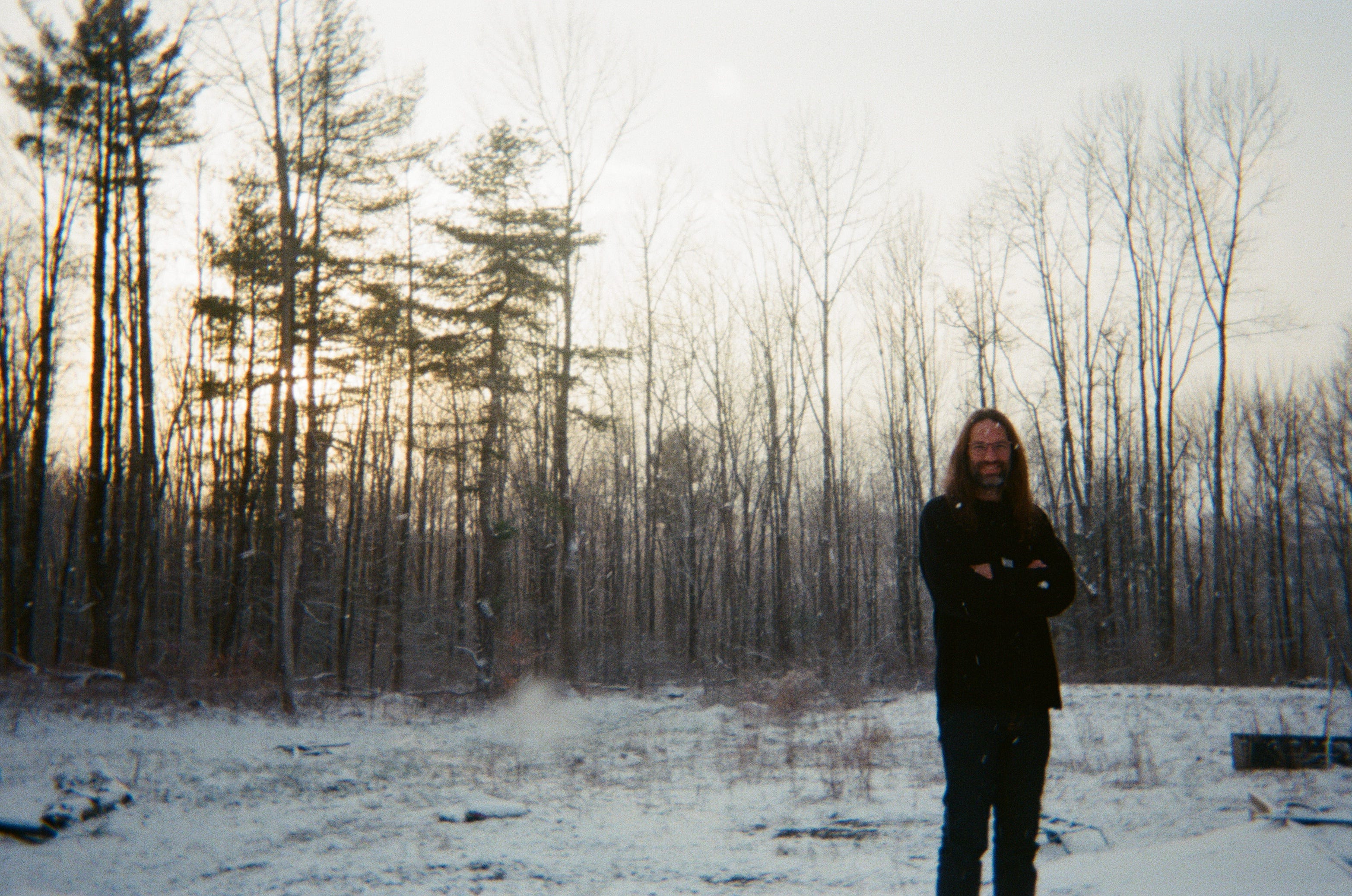
What’s something you’ve done sober that you never thought you could do sober?
Performing. Period. I had such terrible stage fright. The amount of cocaine I would have to do to enjoy myself was really quite mind-blowing. At that time, I thought that was practical. I would have to get so completely obliterated to play this one gig we had every three or four weeks at Piano’s on Ludlow. And that required a day or two of recovery. My one goal was for my band to get out on the road. And I remember thinking, “How is this going to work if we have to play every night?”
What’s your go-to non-alcoholic beverage?
Anything in a can. I have to be very clear on airplanes that I want the can.
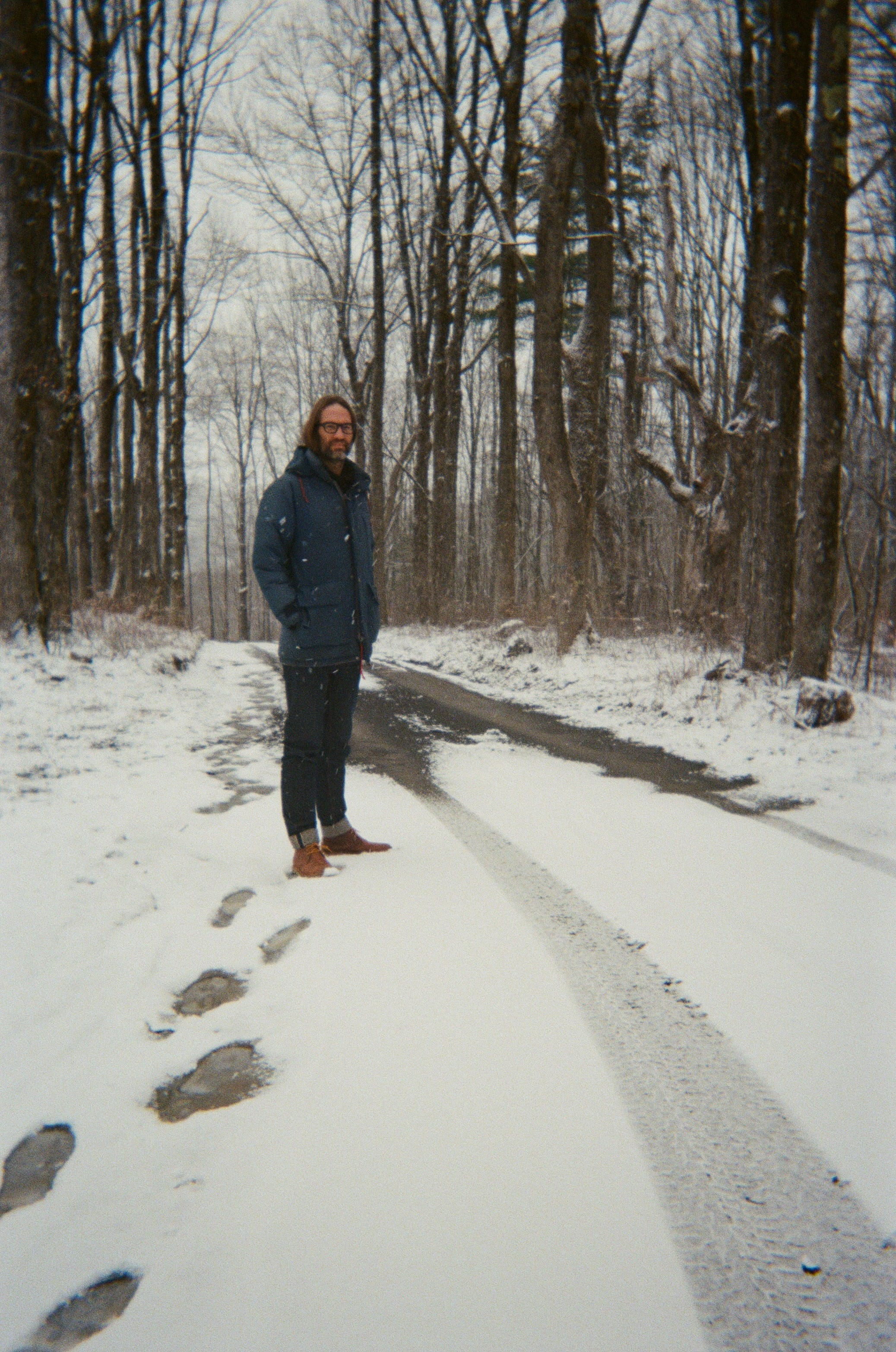
What gives you hope?
When I think about this most recent chapter of my life and the level of unintentional reinvention that has been involved, I find it reassuring. Mostly for my kids. I remember being their ages and being so anxious about what comes next and getting to that next thing. I’ve never been more fulfilled and content, landing somewhere I never pictured myself and doing something I never pictured myself doing. It provides me with reassurance for their futures. Life is a lot richer with possibility than I had once thought. That gives me hope.
Photographs by Molly Whyte
Matt, What a beautiful and thoughtful description. Thank you for sharing such a real conversation.