
“I never knew anybody who was sober.”
There was a time—when I looked back on my elongated and somewhat pastoral youth—that I believed that.
Of course, we only see what we want to see. Or what we’re capable of seeing. Are we riddled with blind spots? Or is the anomaly actually deciphering anything with clarity in a field of view that is created by mind? It’s all illusion. And delusion. Except those few and far between cracks where the light gets in.
To face reality, we get blind drunk. Or, we operate on blind faith. Not that belief is inherently any more obscuring than the blind certainty (and arrogance) of knowing all. And some try that.
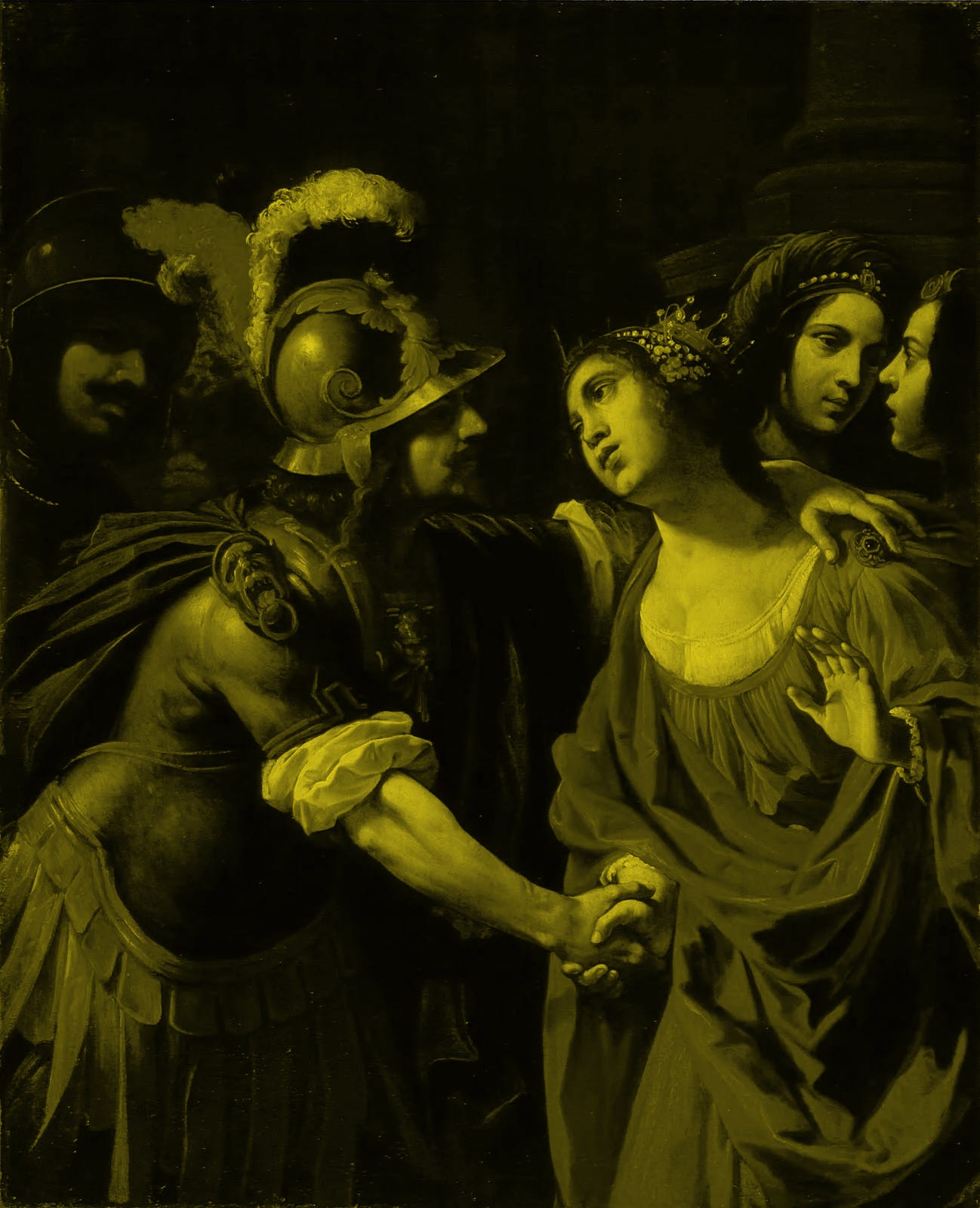
In The Iliad, Mercury rebukes Aeneas as “forgetful of [his] own kingdom” He’s wasting time, adrift. Blind to his own destiny.
Aren’t we all?
How could we possibly live lives beyond our wildest dreams if we saw it all coming? Especially those of us who were too busy trying to be Caligula. Or trying not to be. And failing.
Which brings me to Latin.
In my house, Latin was mandated. It didn’t matter that it was a dead language. It didn’t matter that it would doom me to ignorant monolingual American status no matter where I went in the world. “It will teach you to put a sentence together,” my mother would say. And, with some reluctance, I have to admit she was right.
Never mind that my five-year-old daughter can parle mieux Français after a semester at French school than I could after five-years of “studying” Latin.
The draw wasn’t the prospect of speaking the language, anyway.
The draw was Doc.
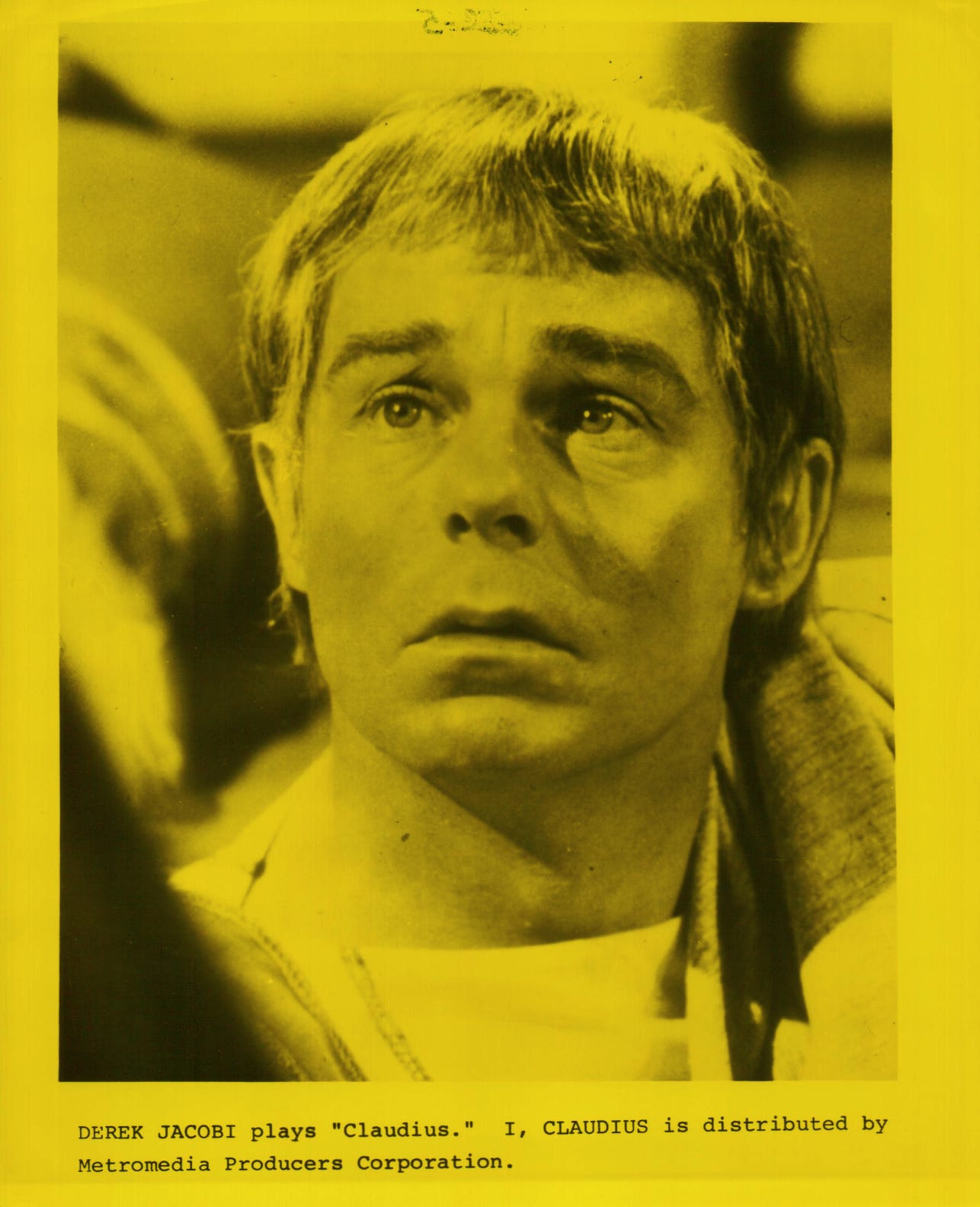
Doc (aka Dr. Stephen Rosenquist) was the Latin teacher at the bougie prep school I attended in the suburbs of Detroit. With Chesterfield stained teeth, coffee-stained shirts, and cat-claw stained forearms (and ever coiffed in Derek Jacobi’s haircut from the 1976 BBC series, I, Claudius), he was a holdover from John Knowles’ A Separate Peace. Or Alexander Payne’s, um, The Holdovers.
At a prep school, the past needn’t be excavated. It exists on the same plane as the present. In its own way, it’s a kind of Rome. No aqueducts. But you get the idea. The history is inescapable. And Doc fit the surroundings. He moved through them at a frenetic pace, a White Rabbit clad in khakis and a pair of New Balances. At the time, like Holden Caulfield, I felt that “I was surrounded by phonies…they were coming in the goddam window.” Not Doc. Doc was a real one, perched on the ledge, blowing smoke out of the classroom instead of inside of it.
“Colander skull!”
“Sieve Brain!”
“Idiot-fool! You’ve earned the next translation!”
These are just a few of the insults Doc would playfully throw at us after teenage missteps along the Appian Way. And not a cry closet in sight! There was another, though, that he seemed to save just for me:
“You alcoholic coma waiting to happen!”
At the time, that one rolled off of me like the cold Rolling Rock that would roll down my throat on the weekends. It never occurred to me that, like Cassandra, he could be peering into a future that, just perhaps, he was preternaturally qualified to see.
Doc saw something in me twenty years before I could see it in myself.
How could I have possibly known at the time that all the caffeine, the nicotine, and the collecting of discarded animals were sure signs of a sober spiritual master (a magister non bibendi, if you will)?
The thing about the sober world is that it unfolds in real time with the broader (wasted) one. It’s all out in the open. Even the anonymity of the program isn’t an impenetrable shroud. It’s easy to ignore those smoking cigarettes in front of Cafe Tropical on the way to Silversun Liquor until you’re one of them. The burlap bag was over our heads, not theirs.
We only see what we want to see.
And when it came to teenage yours truly, Doc could see it plain as day.
He knew I was an Aeneas, flittering away my young life on some proverbial Mediterranean shore.
And yet, he couldn’t spare me (in the words of Father John Misty) “all [the] pointless benders with reptilian strangers.”
He couldn’t spare me “all the mornings lost to cognitive fug” or the decades of never “seeing whatever talent [I had] being taken to its outer limits through focus and application.” This, the opportunity cost of imbibition my column god, Janan Ganesh, outlines in “A drinker’s case against drinking” published in my beloved pink paper. Prep school is expensive. But likely not as expensive as that compounded hangover.
Nobody can see the light for you. But when I saw it, it was unseeable. As was the realization that Doc was “one of us!”
“Where was he now?” A few months into sobriety, I had to look him up. I had to thank him. To let him know that—by the grace of God—I’d dodged the imminent toxic stupor he foretold. And to tell him what he already knew: that I had struggled along in his class for a reason, that those conversations we had had all those years ago were two addicts in a room chopping it up and all of the magic and healing and perspective-shifting that entails.
But I was too late.
What I found when I tried to look him up was an obituary. He’d passed a few months earlier.
Tempus fugit.
Carpe diem.
Listed in the spare description of his 70 years in Earthly form were his three passions: Academia. Rescue cats. And “the fellowship,” where he helped “unknown numbers of troubled people to wellness and productivity.”
I count myself as one of them.
I remember, 30 years ago, my head resting on my Latin book, Doc chiding me that Caesar ipsum wouldn’t be transmitted “by osmosis.” But some things are. As it turns out there was more life in that dead language than I ever could have imagined.
Flabbergasting 💌
Lovely. I don’t know Latin, but this one was tres elegant.