
For the addict, the specter of death can be real and ever present. Sobriety gives us new life. Yet we still die. We die “to one life in order to gain access to another.”
One enters one thing (a drunk) and exits another (a sober legend). One arrives spiritually empty. One “leaves” spiritually full. It’s heroic.
When we come in, we are disoriented (from society) and disintegrated (from self). Our right side up is upside down.
Sobriety, with all of its contrary action, is inverting. It’s an archetypal journey that follows the structure of a traditional rite of passage: separation, threshold crossing, and reintegration.
Separation. From the substance itself (abstinence) and “lower companions.” We make a list (or inventory) of resentments and identify and distinguish our part in it.
Threshold crossing. Admitting powerlessness. Offering ourselves to God. “Handing it over” to a trusted guide, a Senex of sorts.
Reintegration. Acknowledging and accepting the shadow part of self (and other). Aligning with “a design for living.” Maintaining a life of service, community, and conscious contact with spirit to remain on that other side, whole.
As Jung observes, “For thousands of years, rites of initiation have been teaching spiritual rebirth; yet, strangely enough, man forgets again and again the meaning of divine procreation.” It seems paradoxical to have forgotten something I never knew, but that’s definitely how it feels.
As Jungian analyst Sallie Nichols writes, “In our modern culture we have almost no such specific initiation rites so that young men have difficulty making [the] transition” from boyhood to adulthood. Joseph Campbell alluded to debauchery, degeneracy, destructive behavior, and the psychological disorientation of youth as being direct results of modern society’s lack of rites and ritual. Throughout my prolonged late adolescence, the disorientation, debauchery, destructiveness, and degeneracy were a perverse source of Peter Pan pride. I knew I was a bad “boy” (or was trying to be). What I had absolutely zero vis on was the seething resentment percolating underneath it all.
In the creation of “the program,” Bill Wilson landed on resentment as “the number one offender.” This insight has ancient antecedents. “‘He abused me, he mistreated me, defeated me, robbed me.’ Releasing such thoughts banishes hatred for all time,” can be found in the 2500-year-old pages of The Dhammapada.
When resentments are released, the ego has the opportunity to reorganize. And with it, a sort of death occurs. The death of the inflated self-image, for example. Or, the death of the grievance-based identity. And the birth of humility.
And almost all of us are born upside down, right, head first?
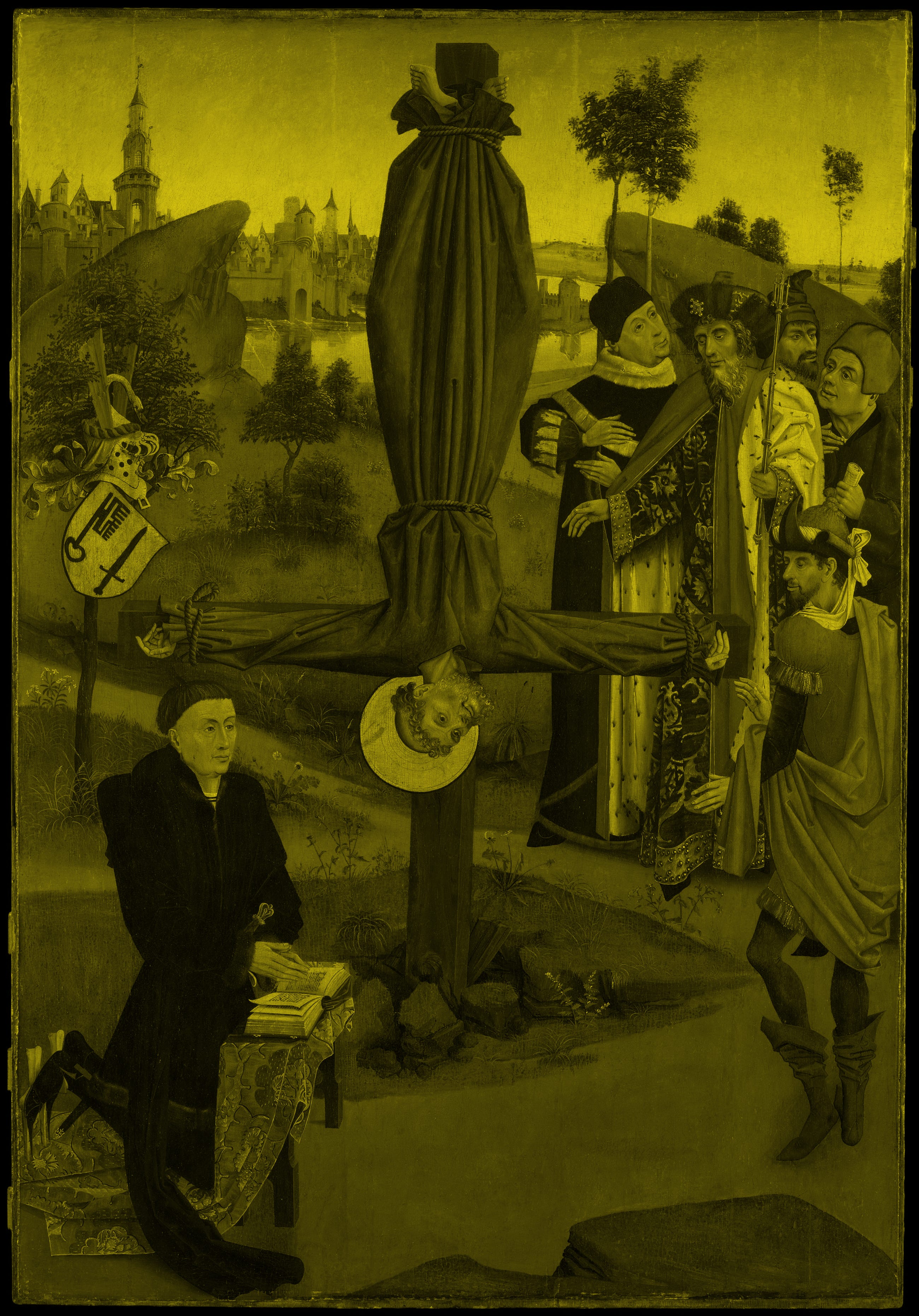
Saint Peter, the first Pope, “the rock” upon which The Church was built, was crucified upside down because he deemed himself unworthy to die the same way Jesus did. His martyrdom (and his overturned cross) an enduring symbol of humility.
The Hanged Man—an archetypal image from Tarot’s major arcana—is symbolically representative of voluntary suspension, ego surrender, reversal of ordinary consciousness, and transformation through waiting. His hanging there, a rite of passage in its own right.
The allusions here to sober life are rampant. Think: “Pause when agitated.” “Let go and let God.” “Surrender.”
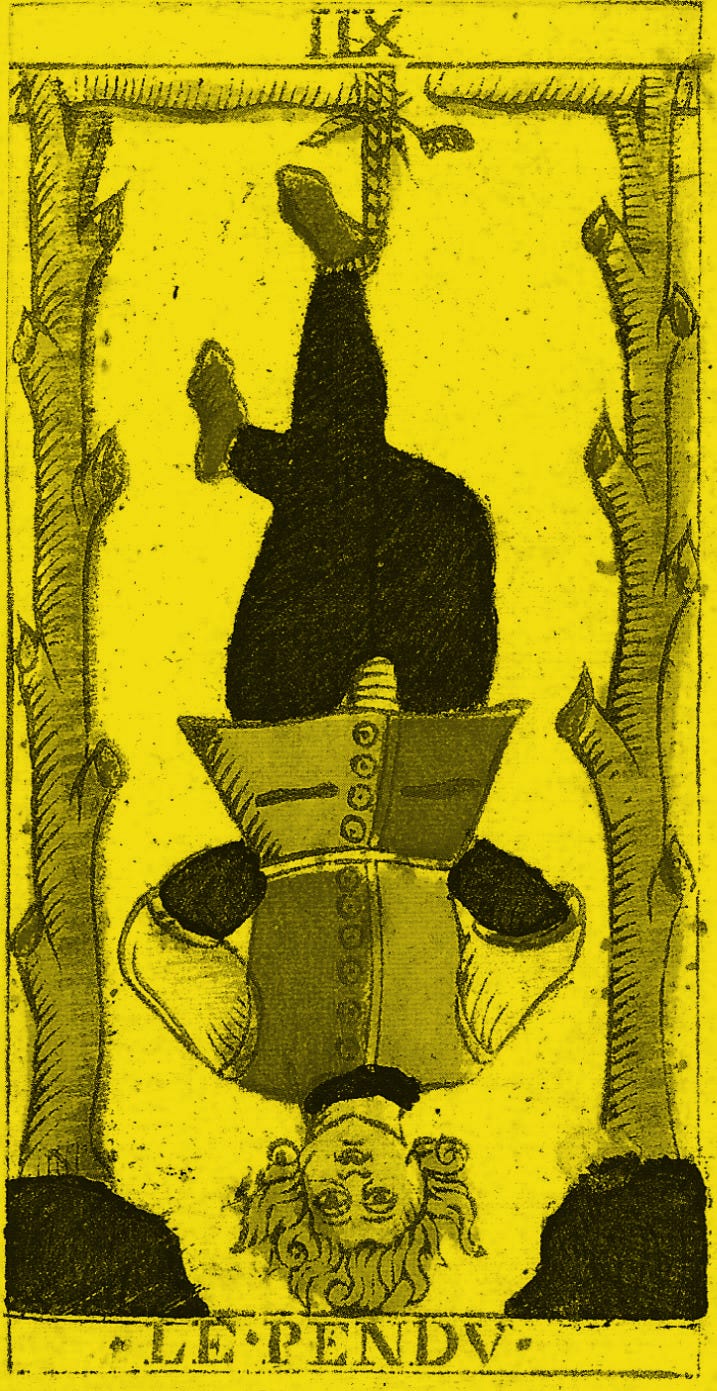
Of The Hanged Man represented in the 15th century Tarot of Marseille, Nichols writes: “he must have felt deeply wronged [and] suffered long before attaining this degree of acceptance…it is easy for us to empathize with the young man’s initial fury and resentment.”
And yet, we also must acknowledge that he put himself there. Like Odin upending himself from the World Tree for nine nights in exchange for wisdom, it’s a voluntary elevation. Embarking on “the road to happy destiny” is elective. The discomfort that comes with it—and it can be ample—is a meaning-making transpersonal choice.
And in a modern world more and more emptied of ritual and coming-of-age rites, meaningful transformation demands that the initiate, initiate.
Many traditional rites of passage were essentially feats of strength. Sure, it takes strength to bear the weight. But it also takes strength to let it go. Here, I imagine Sisyphus, flipping the narrative, and watching the boulder roll down the hill, like, “Oh well, it is what it is.”
I, for one, have never experienced anything quite so forcefully transformative as total surrender.
Sobriety isn’t heaven. It isn’t Valhalla. It’s the journey there. Hang on if you can. And let go.
🙌
Nice one, Peter Pan. Hang in there!